Photography Tips and Advice
Article on Improving your Photographs
Article on Close-up Photographs
The Art of Taking Close-up Photographs
by Grant Collier
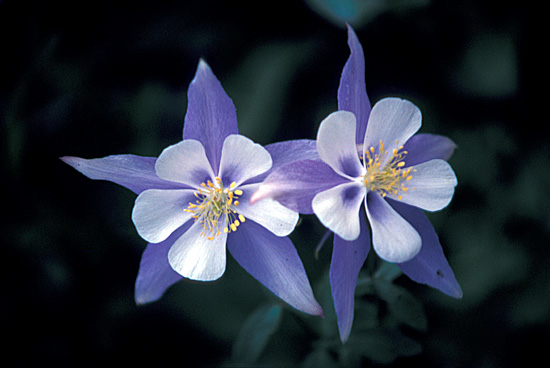
 In their zest to photograph spectacular, sweeping landscapes, photographers oftentimes overlook one of the best photographic opportunities - close-ups.
Although any photographer would be proud to shoot an incredible landscape, these photographs can be difficult to come by, as they require that you be in exactly the right place at exactly the right time. Great close-ups, however, can be found as near as your own backyard. A simple shot of a flower or a reflection in a puddle may rival you best landscape shot.
Following is a run-down of some of the important aspects of a close-up photo.
Composition
Perhaps the most important element of any close-up is its composition. Although the scene you are photographing may be truly uninspiring, you will learn that, with a little patience, great photographs can be taken almost anywhere.
The key to producing these photographs is to carefully pick out the most interesting or unusual aspect of a scene. Make sure to exclude any extraneous features, such as a broken twig or a man-made object. If you compose the photograph well enough, the viewer will never know that the actual scene was rather drab and uninteresting.
Lighting
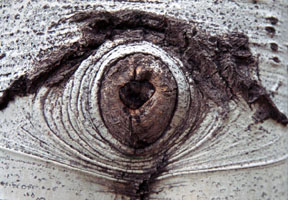 Another important aspect of close-ups is the lighting. The best lighting is probably during the early morning or late-afternoon. A scene that is fairly dull at mid-day can come alive in the evening as shadows begin to fill the landscape.
The soft and diffuse lighting on an overcast day can also produce great close-ups. Of course, the sharp contrasts and harsh lighting created by the mid-day sun may be desirable in certain situations.
The best advice is probably to experiment with many different lighting conditions. Take photographs at all times of the day, and carefully examine why some photographs came out better than others. Soon you will know what lighting is necessary for each photograph you take.
Color
Color is an important element in any photograph, including close-ups. A great composition with excellent lighting may render only a marginal photograph if the colors are wrong.
Sometimes, bright, vibrant colors are best for producing interesting photographs. Other times, monochrome photographs can help bring forth some of the subtleties of a picture, such as the shadows and texture.
The use of colors clearly depends on the preference of the photographer. There is now "right way" to coordinate the colors within a photograph. However, the best photographers learn what colors work best and produce photographs that almost anyone can appreciate.
 Shutter Speed
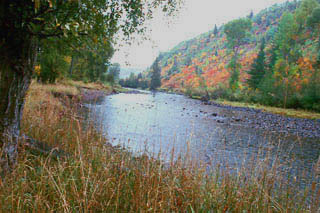
If the scene you are photographing is perfectly still, the shutter speed will be of little importance and the aperture settings will take top priority. However, if it is windy or if the subject is moving, you will have to decide if you want to freeze the motion or accentuate the motion. Oftentimes, you will want to keep the entire scene in focus and will choose a short shutter speed. On other occasions, though, you may want a long shutter speed so as to capture the movement of a scene. For instance, the blurred motion of running water can oftentimes make for a great close-up.
Aperture
Generally, you will want to choose a small aperture (such as F-16), so as to render the entire picture in focus. However, you may on occasion want to focus on just one aspect of a scene. This is a good way to exclude extraneous features from a close-up. By using a large aperture, you can focus strictly on the main subject, and leave the rest of the picture out of focus. This allows you to draw the viewer's attention to what you feel is important.
For more photography advice, we strongly recommend the National Geographic Photography Field Guide.
For a photography equipment, we recommend
B&H Photo Video
Back to The Web's Top Photography Pages